Ice dams on a central Pennsylvania roof: why they form and what actually stops them
How ice dams form, what to do when water is coming in now, why heat cables and salt are stopgaps, and why attic air sealing and insulation are the repair. Includes what changes with a metal roof.
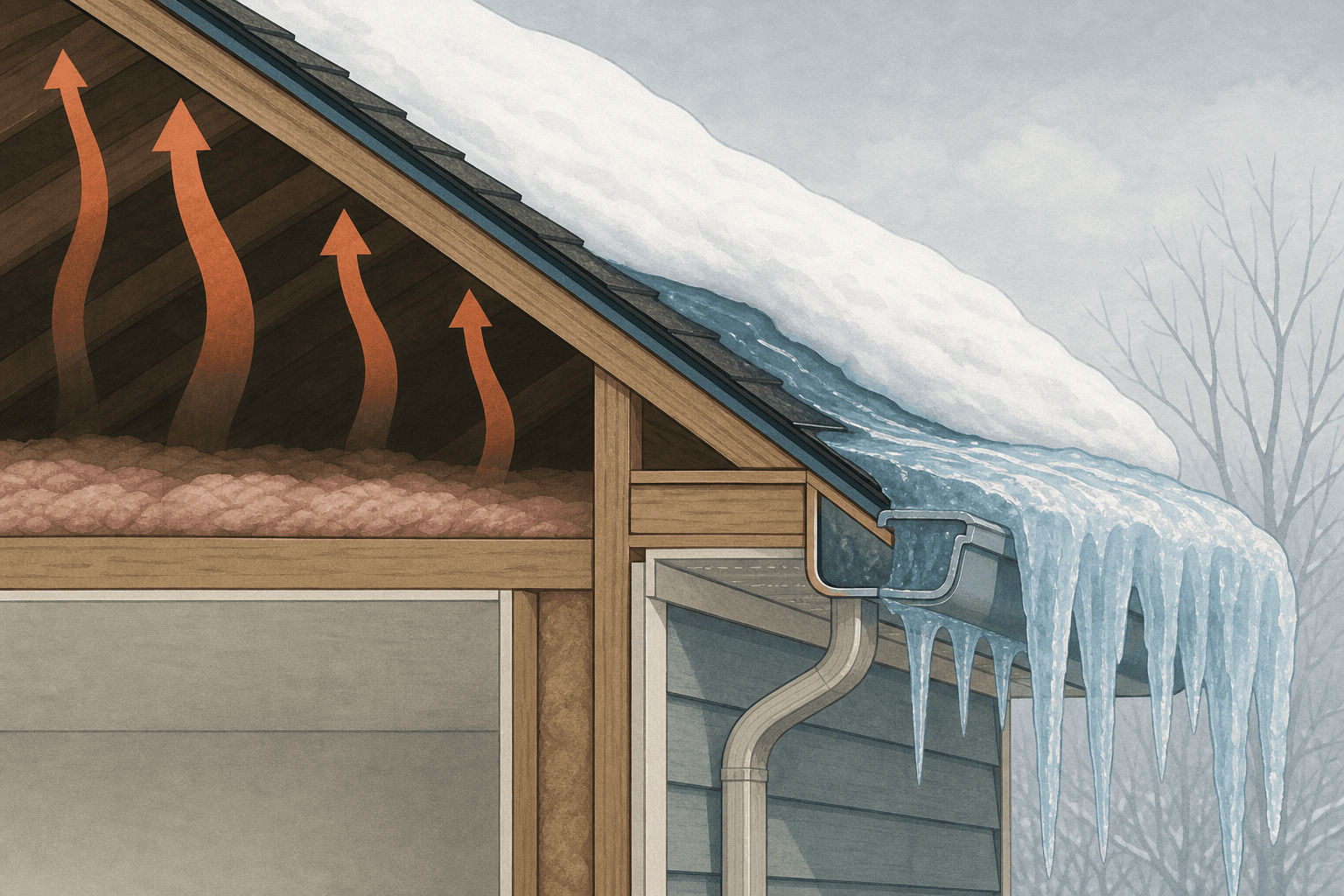
An ice dam is a ridge of ice along the edge of a roof that traps melting snow behind it. The water backs up under the shingles, finds a nail hole or a seam, and comes into the house at the top of an exterior wall. It looks like a roof problem, and the roof usually gets blamed, but the ice is there because the house is losing heat into the attic. Fix the heat loss and the dams stop; everything else is a way to get through this winter.
Key facts
- Ice dams form when the upper roof is warm enough to melt snow and the eave is cold enough to refreeze it. Attic heat makes the first half of that happen.
- The permanent fix is in the attic: sealing the air leaks and adding insulation, then ventilating so the roof deck stays cold.
- Heat cables, roof raking, and calcium chloride are stopgaps. They manage the symptom for a season.
- Never chip ice off a roof. It takes the shingles with it.
- Metal roofs shed most snow before a dam can form, but they still dam at valleys and at low-slope sections.
How the ice gets there
Snow on a roof is insulation. Heat escaping the house warms the roof deck under the snow, the bottom layer melts, and the water runs downhill under the snowpack. At the eave, the roof hangs past the heated wall, the deck is as cold as the air, and the water freezes. Each cycle adds a layer. After a week of daytime melt and nighttime freeze the ridge is thick enough to hold a pool of water above it, and shingles are made to shed water running down, not to hold water standing still.
The heat comes from specific places. Attic bypasses, the gaps where warm air moves straight from the living space into the attic, matter more than thin insulation does. The usual ones are the top plates of interior walls, recessed light fixtures, the attic hatch, plumbing and wiring penetrations, the chimney chase, and bath fans that vent into the attic instead of outdoors. A bath fan dumping steam into an attic is both a heat source and a moisture source, and frost on the underside of the roof deck is the sign of one.
When water is coming in right now
The damage inside is what makes this urgent: stains at the ceiling edge, paint bubbling at the top of a wall, wet insulation. Two things help this week.
Rake the snow off the lower three or four feet of roof from the ground with a roof rake on a pole. Less snow above the dam means less meltwater feeding it. Do it from the ground; do not go up.
Open a channel through the dam so the pooled water can drain. The common method is a tube sock or leg of pantyhose filled with calcium chloride ice melt, laid across the dam so it melts a path. Use calcium chloride, not rock salt; salt damages shingles, metal flashing, and the plants below the gutter. Do not use a hammer, a hatchet, or a pressure washer. Chipping ice takes shingle granules and edges with it, and the roof leaks in spring where the ice was.
If water is actively running inside, move what it will damage and catch what you can. Wet ceiling drywall and insulation are a restoration job once the water stops; the water damage page covers what that involves, and the first 24 hours article covers what to do before anyone arrives.
What does not fix it
Heat cables zigzagged along the eave keep a melt channel open. They work as long as they are on, they cost electricity all winter, and they do nothing about the heat loss causing the dam. They are a reasonable bridge on a house that will get attic work next summer, and a poor permanent plan.
Replacing the shingles does not fix it either, unless the roof was the only thing wrong. A new roof over the same warm attic dams the same way. What a new roof can add is the ice and water membrane at the eave, discussed below, which keeps a dam from leaking even if it forms.
Adding insulation without air sealing helps less than people expect. Insulation slows conducted heat, but warm air pouring through a gap around a light fixture goes right past it.
What does fix it
The repair is in the attic, in this order:
- Air seal. Find and close the bypasses with foam, caulk, or rigid covers: top plates, penetrations, the hatch, around the chimney with fire-rated material, and any recessed lights that are not rated for contact with insulation. Reroute bath fans to vent through the roof or a gable wall.
- Insulate. Once the air leaks are closed, bring the attic insulation up to a full depth. Blown cellulose or fiberglass over the existing layer is the common approach. Keep it out of the soffit vents with baffles.
- Ventilate. Soffit vents at the eave and a ridge vent or gable vents at the top let cold outside air wash the underside of the roof deck, so it stays as cold as the eave and the snow melts at the same rate everywhere.
An attic that is sealed, insulated, and vented keeps the roof cold, and a cold roof does not make ice dams. The winter preparation article covers the rest of the house.
When the roof does get replaced, ask for a self-adhering ice and water membrane under the shingles at the eaves, run far enough up the roof to reach past the inside face of the exterior wall, and in the valleys. In a climate like this one, that is standard practice and the code expects it. It does not stop dams, but water behind a dam cannot get past it.
Metal roofs and ice dams
A metal roof sheds most of its snow, which removes the fuel for a dam, and it is one of the reasons metal does well in this climate; the metal versus shingles article goes through the trade-offs. Metal still dams in two places. Valleys hold snow that the panels on either side cannot shed, and a dam there backs water up under the panel laps. And the lower-pitched sections of a house, a porch roof or an addition, hold snow the main roof throws onto them.
Snow guards, which are installed on metal roofs so slabs do not come off over doorways, also hold snow in place above the guards. That is by design, and a metal roof with snow guards along the eave needs the same cold-attic treatment as any other roof. If a metal roof is leaking at a dam, the fix is usually at the lap or a fastener rather than the panel itself, which is covered on the metal roof repair page.
Insurance
Water damage inside from an ice dam is typically treated as sudden damage by homeowners insurance, while the cost of removing the ice or fixing the attic is not. Every policy differs and the carrier decides; the roof leak insurance article explains how a claim runs and what to document before anything gets cleaned up.
Common questions
Why does my neighbor's identical house not get ice dams?
Attic air sealing and insulation vary house to house far more than roofs do. The house without dams has a colder attic, whatever the reason.
Are icicles a sign of an ice dam?
Big icicles at the eave mean meltwater is reaching the edge and refreezing, which is the process that builds a dam. Small ones after a sunny day are normal.
Can I prevent dams by keeping the gutters clean?
Clean gutters help water leave the roof, but the ice forms above the gutter on the roof edge, and a house with no gutters at all still dams. Clogged gutters make it worse; clean ones do not fix it.
Is it worth insulating an attic in an old house?
It is usually the highest-return work on the house, for the heating bill as well as the roof. Old houses with plaster ceilings and knob-and-tube wiring need an electrician's check before insulation goes over the wiring.
If water is coming in, deal with the water and the snow load this week and put the attic on the list for the first dry month. If you want the dam to be the last one, describe the house here, including the age and what is in the attic now.
Have a project like this in Lock Haven or Clinton County?