Deck repair or replacement: how to tell which one your Pennsylvania deck needs
How to inspect a wood deck in Pennsylvania and sort a repair from a rebuild: the ledger, the posts at grade, frost-heaved footings, joist rot, railing height rules, and when a permit comes into it.
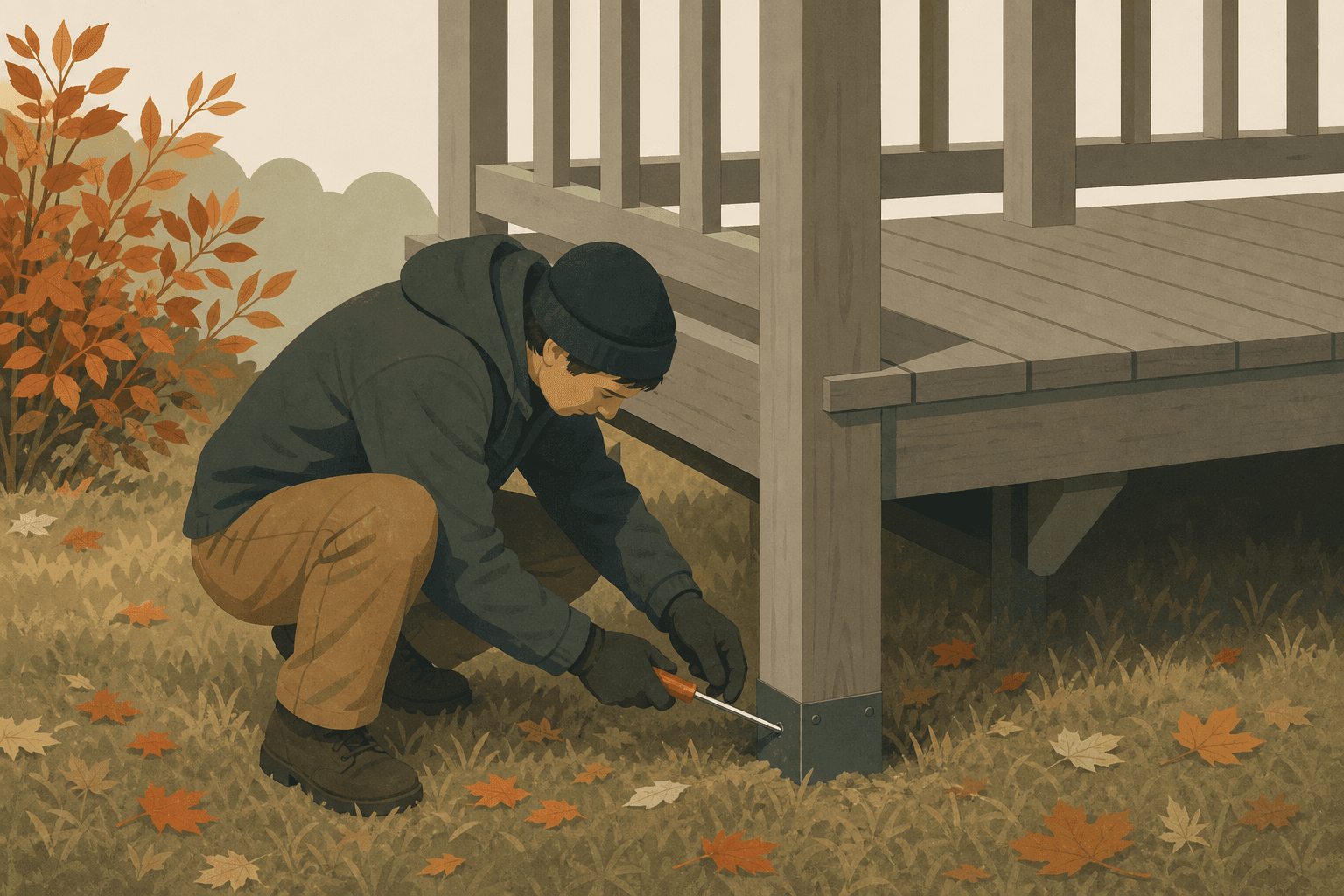
Decks fail where they meet the house and where they meet the ground, which are the two spots people rarely check. The boards and the railing are what you see, and they are the easiest parts to replace. The ledger board bolted to the house and the posts standing in the dirt are what hold the deck up, and when those go, the deck is a rebuild no matter how good the boards look. Checking four things in order tells you which side of that line you are on.
Key facts
- The ledger, the board that attaches the deck to the house, is the most common point of deck collapse. Rot behind it or a missing flashing usually means the deck comes off the house.
- Posts buried in the ground or sitting on the soil rot at grade. Posts on a proper footing with a metal base do not.
- Frost pushes shallow footings up and drops them back unevenly. The deck footing article covers how deep they need to be here.
- Boards and railings are wear parts. Replacing them is a repair, not a rebuild.
- Guards are required on any deck more than 30 inches above grade, at least 36 inches high, with no opening a 4 inch ball can pass through.
Check the ledger first
Go where the deck meets the house and look at the top edge of the ledger. There should be metal flashing tucked up behind the siding and lapped over the ledger so water sheds away from the joint. If there is no flashing, or a bead of caulk is doing the job, water has been getting behind that board for as long as the deck has stood.
Push a screwdriver into the ledger at the bottom edge and near each bolt. It should stop hard. If it sinks, the board is soft. Then look at how the ledger is attached. Lag screws or through-bolts into the rim joist of the house, in a staggered pattern, are right. Nails are not, and neither is a ledger attached over the siding with a gap behind it.
If the ledger is rotted, or the house rim joist behind it is, the deck cannot be repaired in place. The rot is inside the house wall at that point, and the fix is to pull the deck off, open the wall, replace what is soft, flash it correctly, and build back. That is a rebuild with a repair to the house in front of it.
Then the posts and footings
Follow each post down to the ground. A post sitting directly on soil, or set into a hole and backfilled, is wicking water from below. Probe it at grade the same way. A post that is soft at the bottom cannot be patched, but on a deck with a sound frame a single post can be replaced by temporarily supporting the beam.
Look at what the post stands on. A poured concrete footing with a metal post base that holds the wood above the concrete is what code calls for. A pier block set on the ground is not, and it is the footing that frost lifts every winter. A deck that has gone out of level over the years, with doors that stick in spring, is showing you heaved footings.
Undersized or shallow footings under an otherwise sound deck are the gray area. The frame can sometimes be lifted and new footings poured under it. Whether that beats a rebuild depends on how much else is wrong.
Framing
Joists rot from the ends and from the top. The ends sit in metal hangers against the ledger and the beam, and rust streaks on a hanger mean water has been sitting there. The tops rot under the deck boards where debris packs between them. Probe the joist ends and the top edge under a few boards.
One or two bad joists get sistered, a new joist fastened alongside the old one, or replaced outright. Rot across most of the joists is a new frame. While you are under there, note the beam: a beam made of two boards nailed together with a gap between them holds water in the gap and rots from the inside. And note the span. Decks built by hand often have joists running farther than their size allows, which is the bounce people feel walking across.
Boards and rails
If everything above checked out, the rest is a repair. Cupped, split, or soft boards get replaced. A railing that wobbles at the posts usually needs new post connections, not a new railing, and the posts should be bolted through the rim with hardware, not just lagged into the end of it.
This is also where the railing rules apply. Under the residential code Pennsylvania municipalities enforce, any deck surface more than 30 inches above the ground needs a guard at least 36 inches high, with balusters spaced so a 4 inch sphere cannot pass. Stairs need a handrail, risers no taller than 7 3/4 inches, and treads at least 10 inches deep. An older deck with a low or wide-spaced railing is not automatically illegal, but when the railing gets rebuilt, it gets rebuilt to that.
Repair or replace
| Finding | Repair | Rebuild |
|---|---|---|
| Ledger soft, unflashed, or nailed | Yes, with the house rim repaired | |
| One post soft at grade, frame sound | Replace the post | |
| Several posts soft, or posts in the ground | Yes | |
| Footings heaved, deck out of level | Sometimes: lift and re-footing | Often |
| One or two joists rotted at the ends | Sister or replace them | |
| Joist rot throughout, or spans too long | Yes | |
| Boards cupped, split, or soft | Replace boards | |
| Railing loose or under height | Rebuild railing |
Permits and materials
Replacing boards and railings on an existing deck generally does not need a permit. A new deck, a new frame, new footings, or a ledger reattachment usually does, and the municipality decides which. The permit article covers who to ask in Clinton County.
If it is a rebuild, that is the moment to decide on materials. Pressure-treated framing is the standard either way. For the boards, treated wood, cedar, and composite each trade cost against upkeep; composite does not rot or splinter but needs the joists spaced closer, which matters on a rebuild and not on a board swap. The deck and porch page describes how a design-build deck job runs, footings through railings.
Common questions
The deck bounces when I walk on it. Is that dangerous?
It is a sign the joists are spanning farther than they should, or the beam is undersized. It is not an emergency on its own, but it belongs on the list, and it usually means the frame will not pass the next inspection if it is ever touched.
Can I just put new boards over the old frame?
Only if the frame checks out under the probe. New boards on rotted joists is a fresh surface over a failing structure, and it hides the problem for a few more years.
Is a ledger really that important?
Deck collapses that make the news are most often the ledger pulling away from the house. It carries half the deck's weight and every person standing near the door.
How long does pressure-treated wood last?
Framing that stays dry and off the ground lasts decades. Framing in ground contact, or with water sitting on it, does not. Where the water goes matters more than what the wood is rated for.
If the ledger and the posts pass, the deck needs some work. If either fails, it needs a plan, and both are ordinary jobs. Describe what you found and include a photo of the ledger.
Have a project like this in Lock Haven or Clinton County?